“Connecting the best of science and industry” – University of Utah and Ottobock launch partnership
The university's Bionic Engineering Lab becomes “Hans Georg Näder Laboratory” / Engineers from the University of Utah to cooperate closely with Ottobock in future
Friday, 7 October 2022
The Bionic Engineering Lab at the University of Utah in Salt Lake City is developing the next generation of bionic limbs. A partnership with Ottobock is intended to make the advanced technologies that Tommaso Lenzi, head of Laboratory and Professor of Neurorehabilitation Technology, and his team are already working on successfully, available to patients as well.
Bionic Engineering Lab becomes “HGN Lab”
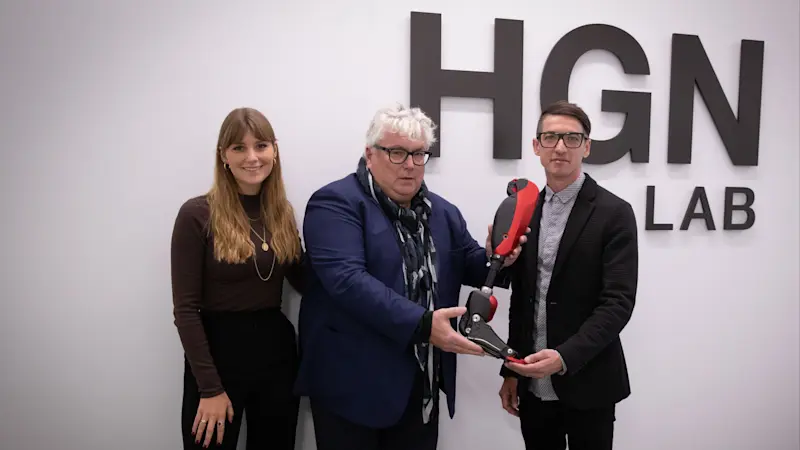
The cooperation not only provides for close collaboration and mutual exchange of expertise: Hans Georg Näder, Ottobock owner and Chairman of the Management Board, is also sponsoring the university's laboratory as the initiator of the collaboration. The Bionic Engineering Lab is now being called the Hans Georg Näder Laboratory, or HGN Lab for short.
“We want to make sure that the good ideas get from the lab to the market as quickly as possible,” says Tommaso Lenzi. “Our partnership will enable us to work together on problems, combining the best of science with the best of industry.” Tommaso Lenzi and Näder provided further details at the official announcement of the partnership on 5th of October. Ottobock will finance a state-of-the-art movement analysis system that includes a force-sensing treadmill and force-sensing staircase, 3D motion capture cameras, and other equipment. “This sponsorship will make the Bionic Lab one of the best — if not the best — equipped lab in the world that is focused on assistive technologies and prosthetics,” Lenzi said. “And we have a development agreement where engineers in my lab and from Ottobock’s research-and-development division will work together to go from the current prototype of the Utah Bionic Leg and create a leg that will hopefully go on the market soon.”
The Utah Bionic Leg uses motors, microprocessors and artificial intelligence to support users during everyday movements. Based on real-time data, the motors in the prosthesis support the user when walking, standing, climbing stairs or crossing obstacles. The Utah Bionic Leg consist of a motor-driven microprocessor-controlled knee and ankle joint. The Utah Bionic Leg is also extremely lightweight for the features and functionality provided.
“As a healthtech champion Ottobock always seek to improve functionality and safety for patients and users worldwide. Professor Lenzi’s technology promises to achieve exactly that. It is a superior prosthetic knee, incomparable to any currently available product. Our partnership with the Bionic Engineering Lab enables this innovation and offers great opportunities to unite Ottobock’s experience and knowledge with technologically exciting new possibilities,” said Professor Hans Georg Näder.