Season finale with Georgia Näder and Oliver Jakobi from Ottobock
The “Taste of Bionics” podcast with Ranga Yogeshwar explores how technology is changing lives.
Wednesday, 4 February 2026
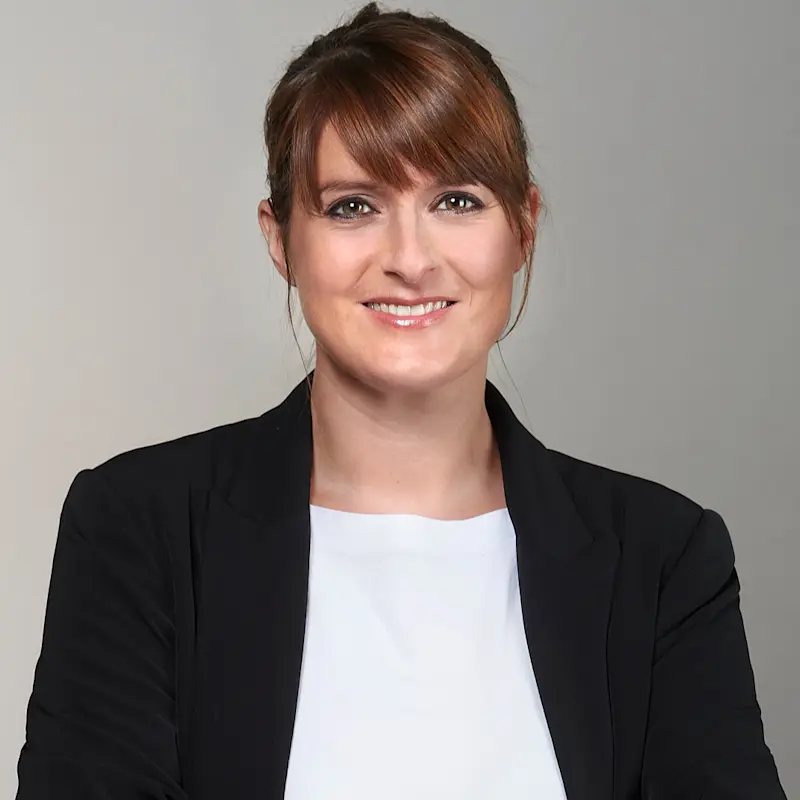
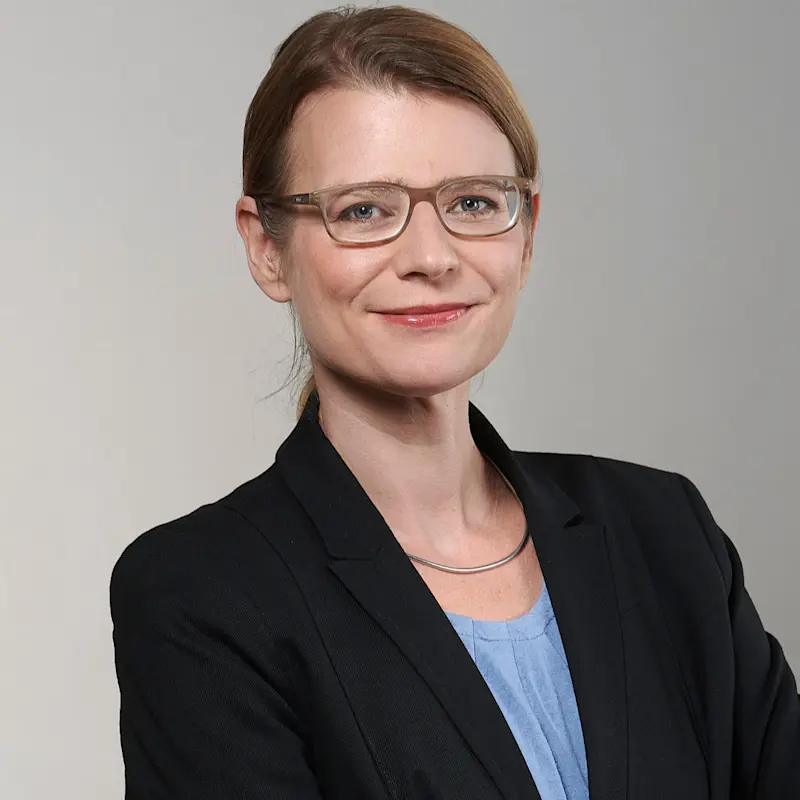
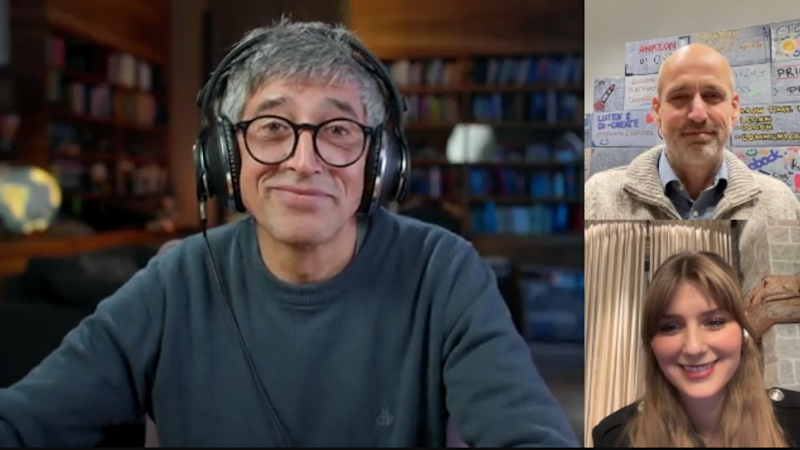
Eight conversations, one guiding theme: Since October 2025, Ranga Yogeshwar has been looking into how the interplay between humans and technology is changing – and what new opportunities this opens up for our society – in the podcast “Taste of Bionics”. At the end of the first season, the science journalist meets two leading figures who each shape Ottobock in different ways: Georgia Näder (28), Regional President for Western Europe and great-granddaughter of the company founder, and Oliver Jakobi (57), CEO of the medical technology company, who began his career here 35 years ago as an apprentice. What connects them is their shared commitment to improving people's lives around the world through innovation and shaping the future of bionics.
A conversation on innovation, user focus and the future
In the final episode, Georgia Näder and Oliver Jakobi take a look at what truly defines Ottobock. They discuss their personal experiences, the importance of corporate responsibility and the technological developments that will shape the future of treatment.
Georgia Näder describes how innovations will be more closely interlinked in the future: Artificial intelligence enables more natural movements of prostheses, neurological interfaces close the gap between intention and action and devices are becoming increasingly intuitive. “Ultimately, the goal is to make mobility more personalised and natural through AI, neurotechnology and sensor technology," she says. “This requires technological precision, but above all a deep understanding of the users’ needs.”
For this reason, Ottobock has established a strong focus on users as part of its product development process. The company systematically conducts user interviews and incorporates market feedback at an early stage. It also benefits from direct insights into users' wishes, requirements and everyday experiences thanks to its own patient treatment services. “Our products should adapt to people, not the other way around,” says Oliver Jakobi. “Functions must offer genuine added value and be both easy to understand and intuitive to use.”
Georgia Näder and Oliver Jakobi believe that the treatment of people with neurological disorders, such as MS, cerebral palsy or stroke, is an important area to focus on in the future. Today, Ottobock is already providing important impetus with solutions such as the Exopulse Suit. In the future, neuro-orthotic approaches are expected to provide even more comprehensive support to patients, for example in rehabilitation. “Many patients with paralysis are given wheelchairs straight away, even though they can often stand or walk short distances,” says Oliver Jakobi. “With the right technology, we can help people to get moving right from the outset, so that the wheelchair becomes a backup rather than a permanent solution.”
Extraordinary guests and ideas
The eight episodes of “Taste of Bionics” show how multifaceted the intersection between humans and technology is today and how people from the fields of science, medicine, development, sport and business are pushing the boundaries of what is possible. Ranga Yogeshwar says: "I love meeting people who are passionate about what they do. Their different perspectives illustrate how bionics works – innovation doesn't just emerge in laboratories, but also from engaging with motivated individuals.”
The first season at a glance:
From Paralympics to Prosthetics in Space. John McFalls extraordinary Journey.
The doctor, Paralympian and first disabled astronaut recalls how a motorbike accident at the age of 19 changed the trajectory of his life. He talks about how modern prostheses have helped him to succeed in sport and could help him on a long-term mission to outer space.The human aspect of exoskeletons. Minerva Pillai on the future of work.
The engineer from SUITX by Ottobock explains how exoskeletons significantly reduce physical strain in industry and logistics. She demonstrates how research and practice can work together to redefine health and safety in the workplace.Recovering function after spinal cord injuries. Dave Marver on breakthrough therapies.
The CEO of ONWARD Medical provides insights into new therapeutic approaches for people with spinal cord injuries. He explains how innovative neurostimulation can help patients to regain mobility and how this can have an impact on their independence.The future of prosthetics. Hugh Herr on the dream of eliminating physical disability.
Drawing on his own experience as a bilateral amputee athlete, the MIT professor explains how he came to research bionic interfaces. He demonstrates how prostheses interact with the nervous system and why this connection enables a new quality of movement.Bionics in motion. Johannes Floors on athletic excellence.
The Paralympic champion talks about his painful childhood, his decision to undergo bilateral transtibial amputation and how he turned his life around to become the fastest man in the world without legs. He shows how bionic technology enables him to achieve top athletic performance and leaf a self-determined life.Muscles and machines. Connor Glass on new approaches to prosthesis control.
The founder of Phantom Neuro explains how minimally invasive interfaces between muscle and machine are created. He demonstrates how such interfaces enable intuitive prosthesis control and explores other potential applications beyond prosthetics.The art of rewiring – Jennifer Ernst on innovative amputation medicine.
The expert in innovative amputation medicine provides an insight into modern surgical methods such as TMR, osseointegration and AMI. She illustrates how these surgical approaches enable renewed mobility while also providing genuine sensory feedback for the first time.The future of human bionics. Georgia Näder and Oliver Jakobi on tradition and transformation.
The two leading figures discuss their family histories, their personal motivations and how Ottobock will develop going forward. They talk about how user-oriented innovations and intelligent technologies are shaping the future of treatment.
“Taste of Bionics” was produced by “Podstars by OMR”. The second season is already in the works – featuring new perspectives, new voices and a glimpse into the future. The (video) podcast is available on all major platforms and YouTube.