Expert Symposium in Dialogue: Greater Independence Through Innovative Care Solutions.
Recent studies and real-world case examples provide insights into new rehabilitation approaches for individuals with neurological impairments of the lower limbs.
Tuesday, 7 July 2026
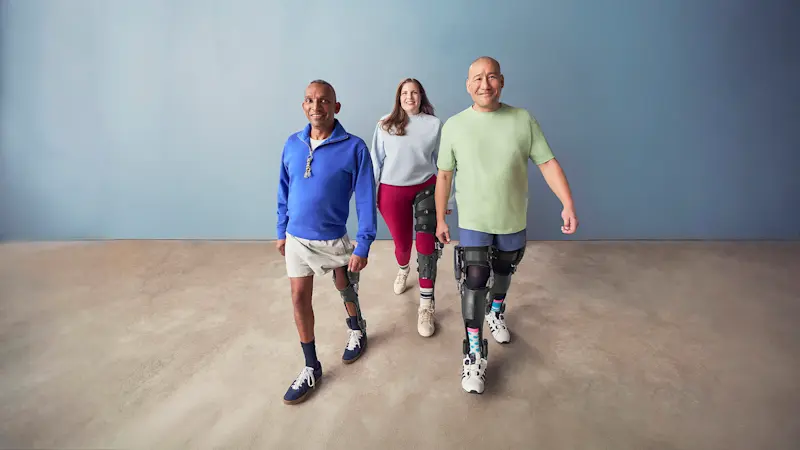
An online symposium on Neuromobility, held on June 16, 2026, provided latest insights into the clinical evidence and real-world use of technologies such as the C-Brace for individuals with neurological impairments of the lower extremities, such as paralysis.
Moderated by Dr. Andreas Hahn (Corporate Vice President Clinical Research and Services, Otto Bock Healthcare Products GmbH, Vienna, Austria), the symposium brought together leading experts to discuss the positive interplay between evidence-based research and the impressive treatment outcomes demonstrated in patient case studies.
“The clinical data and real-world experience clearly demonstrate that improved mobility extends far beyond walking. When individuals no longer rely on walking aids as a result of restored leg function, they effectively regain an arm, figuratively speaking: their hands are free again, allowing them to perform many everyday tasks independently. As a result, they regain not only functional independence, but also greater mobility, social participation, and quality of life,” said Dr. Andreas Hahn.
He further emphasized the importance of patient-centered care, which aims to identify the best possible individualized solution for each patient.
Neurorehabilitation Technologies: From Mechanical Support to Functional Neuromodulation.
Dr. Alessandro Specchia (Specialist in Physical and Rehabilitation Medicine, Spinal Cord Rehabilitation Unit, Villa Beretta, Valduce Hospital, Italy) provided an overview of current technologies and their role in neurorehabilitation. His presentation highlighted innovative treatment approaches, including functional electrical stimulation (FES), spinal cord stimulation, and robotic-assisted rehabilitation systems.
While these technologies are often viewed as primarily biomechanical solutions, Dr. Specchia emphasized that their true value extends beyond mechanical support. He described them as tools for functional neuromodulation that can promote neural plasticity and support the recovery of function.
Using clinical case examples, Dr. Specchia demonstrated how advanced neurorehabilitation technologies can enhance recovery, improve functional outcomes, and support greater independence in everyday life. The cases illustrated the potential of these interventions to facilitate long-term neurological recovery and meaningful improvements in patients’ quality of life.
Practical examples demonstrate the life-changing benefits of the C-Brace.
Chantal Engel (Senior Orthotist, Livit Ottobock Care, Eindhoven, the Netherlands) provided insights into the real-world use of the C-Brace. Through three patient case studies, she demonstrated how this technology can significantly improve mobility, independence, and quality of life for individuals living with severe lower-limb impairments.
One particularly compelling example was Linda: with the help of the C-Brace, she was able to get free from her reliance on a wheelchair and crutches to independently walking, cycling, and dancing again. Across all three patient cases, Engel highlighted significant functional improvements and markedly higher patient satisfaction.
When asked whether the C-Brace represents the optimal solution for every patient, Engel’s answer was a clear “no.” She emphasized the importance of individualized assessment and identified the Diagnostic Test Orthosis (DTO) as a valuable clinical tool for evaluating a patient’s potential benefit from the device.
Engel also advocated for the systematic documentation of treatment outcomes through functional assessments and video recordings. Such documentation can help demonstrate treatment benefits and identify further opportunities to improve patients’ mobility, independence, and quality of life.
Engel's key message: "Take a closer look at the C-Brace – it could change everything."
Clinical evidence from a randomized trial on the C-Brace contributes to wider access to treatment.
Prof. François Genêt, MD, PhD (Head of the Department of Physical Medicine and Rehabilitation, Hôpital Raymond Poincaré, Garches, France) presented the findings of a recently published randomized crossover trial investigating the impact of the C-Brace. The study evaluated the effect of the device on functional limitations, activities of daily living (ADLs), and quality of life in individuals with neurological lower-limb impairments.
The results demonstrated significant benefits of the C-Brace for this patient population. After just two months of use, participants experienced a significant improvement in outdoor mobility, accompanied by improved quality of life. The study also showed that users were able to participate more actively in activities of daily living. Furthermore, Prof. Genêt highlighted that participants relied less frequently on walking aids, particularly during outdoor activities.
In conclusion, Prof. Genêt noted that the study findings played a key role in securing reimbursement for the C-Brace in France. The study therefore represents not only an important contribution to evidence-based orthotic care but also demonstrates how robust clinical evidence can help expand patient access to innovative rehabilitation and mobility technologies.
To view the recording of the symposium, please register by clicking on this link: Advances in NeuroMobility - Clinical and Patient Insights on C-Brace and Neurorehabilitation. After successful registration, the link to the recording will be sent in the confirmation email. The recording is available until 30th September 2026.