“Purpose is more important than happiness.”
How Truus Slingerland faces her challenges with the exopulse suit.
Thursday, 8 October 2026
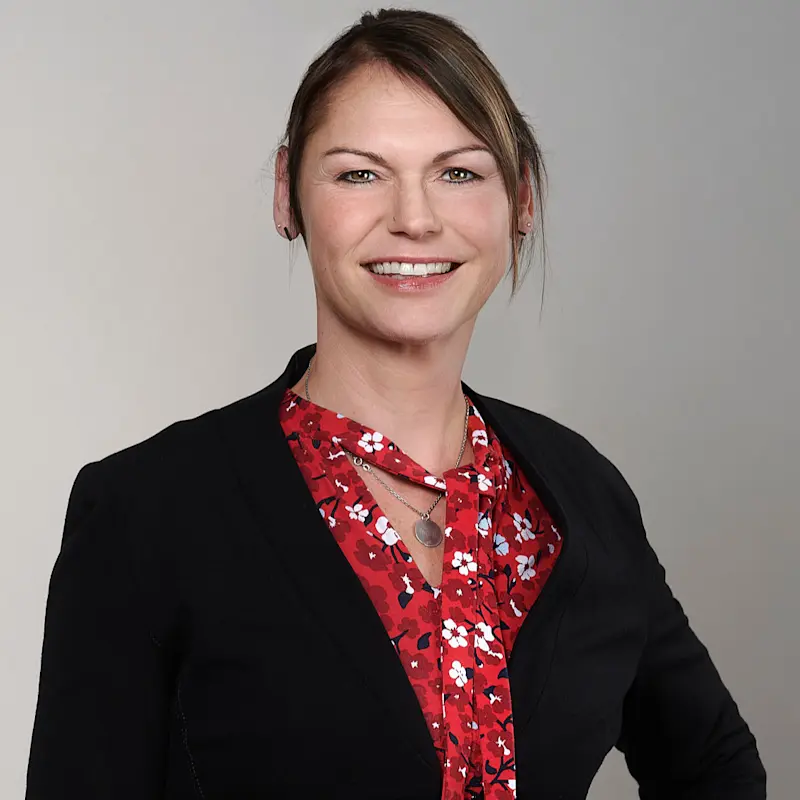
She is full of energy, warm‑hearted and engaged in many ways: Truus Slingerland is 57 years old and has been living with the diagnosis Primary Progressive Multiple Sclerosis – PPMS for ten years. The rare MS variant led to increasing physical limitations, and she ultimately had to give up her career in marketing communications and family counseling. With the exopulse suit, life took a positive turn for Truus in 2022. Her health improved, and she developed an entirely new sense of well‑being. Her father gave her a guiding motto: “Don’t fight against your illness, fight with it.”
Truus lives with her husband, her son, and her daughter in the Dutch town of Nieuw‑Lekkerland, close to the UNESCO World Heritage Site of Kinderdijk, which is famous for its historic windmills. Before her diagnosis, she was a workaholic, working more than 50 hours a week in two jobs. She worked part‑time in palliative care and accompanied people during the final stage of their lives.Nothing could throw her off track. Until she began to fall more often, stumble and have small accidents. After a severe leg injury, she underwent extensive examinations, and the doctors diagnosed PPMS. Her reaction surprised everyone: “Well, at least I’m not dying tomorrow.” That moment shaped her life and awakened her determination.
As the symptoms increasingly affected the right side of her body, she learned to do almost everything with her left hand. “Writing with my left hand was the hardest part. But I managed,” Truus says. Looking back, that time was challenging but meaningful. “The illness forced me to pause and focus on what truly matters: people, relationships and care.”
To remain independent despite her neurological condition, Truus used various aids: a hand orthosis, orthopedic shoes, a walking stick for short distances and a wheelchair for longer ones. She also had her car adapted to her needs. “Together, these aids gave me freedom,” she says.
The turning point.
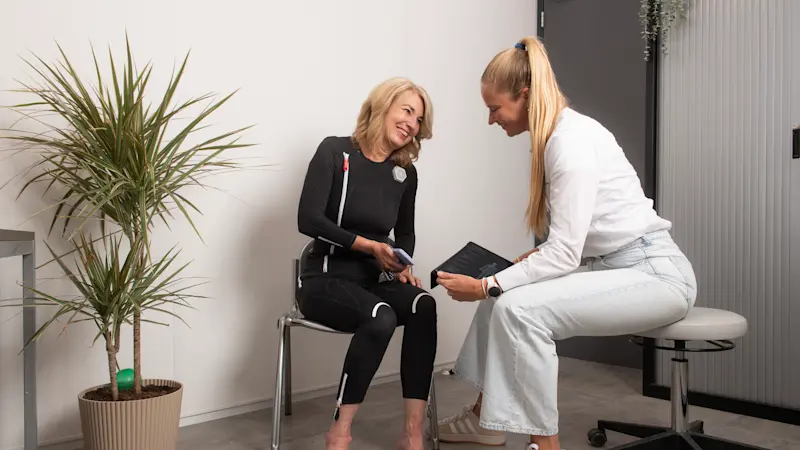
In December 2022, Truus was sitting at the breakfast table scrolling through Facebook posts. Then one post caught her attention: Livit Ottobock Care invited people with neurological conditions to try the exopulse suit. “The difference after the first session was indescribable: I could hold a pen again,” she reports, delighted about many everyday activities she could suddenly manage again: preparing lunch, holding a coffee cup securely, fastening her belt, working in the garden and even playing the piano again. “I was so excited that I wanted to do everything at once. After two days, I was completely exhausted,” she says with a warm laugh.
After the test phase, she had to return the suit. That deeply affected her: “With the exopulse suit, I regained a piece of my independence.” One of her closest friends then organized a crowdfunding campaign and shared Truus’ story with local media. The support was overwhelming: “A few months later, my friend handed me an unusually large gift bag. I first thought it was an early birthday present – but it was the exopulse suit,” she recalls. “I was simply overwhelmed.”
Energy for herself and others.
Five years ago, Truus would never have believed what life still had in store for her. She wears her neuromodulation suit every other day for one hour and benefits from its long‑term effects: “I can sleep through the night again and start the day with much more drive.” Her favorite everyday activities include handicrafts, yoga and a radio show she co‑hosts with her best friend every six weeks.
But that’s not all: Truus not only has energy for herself, she also gives it to people who need support. She volunteers to support people in difficult life situations and tutors students in biology, history, geography and various foreign languages.
“I want to be there for other people. That gives my life meaning. I don’t see PPMS as a blessing, but it has changed my priorities: purpose is more important than happiness,” Truus explains.
About Ottobock
Ottobock, a listed global MedTech champion, combines over 100 years of tradition with outstanding innovative strength in the fields of prosthetics, neuro-orthotics and exoskeletons. Ottobock develops innovative fitting solutions for people with limited mobility and is driving the digitalization of the industry. Founded in Berlin in 1919, the company has business activities in 45 countries with nearly 9,300 employees (FTEs) worldwide and operates the largest international patient care network with more than 430 patient care clinics. Ottobock is shaping the future of human bionics with a strong R&D ratio in the products and components business and over 2,600 patents and patent applications. Ottobock’s mission of improving freedom of movement, quality of life and independence is deeply rooted in the company's DNA, as is its social commitment: Ottobock has been a partner and supporter of the Paralympics since 1988.